
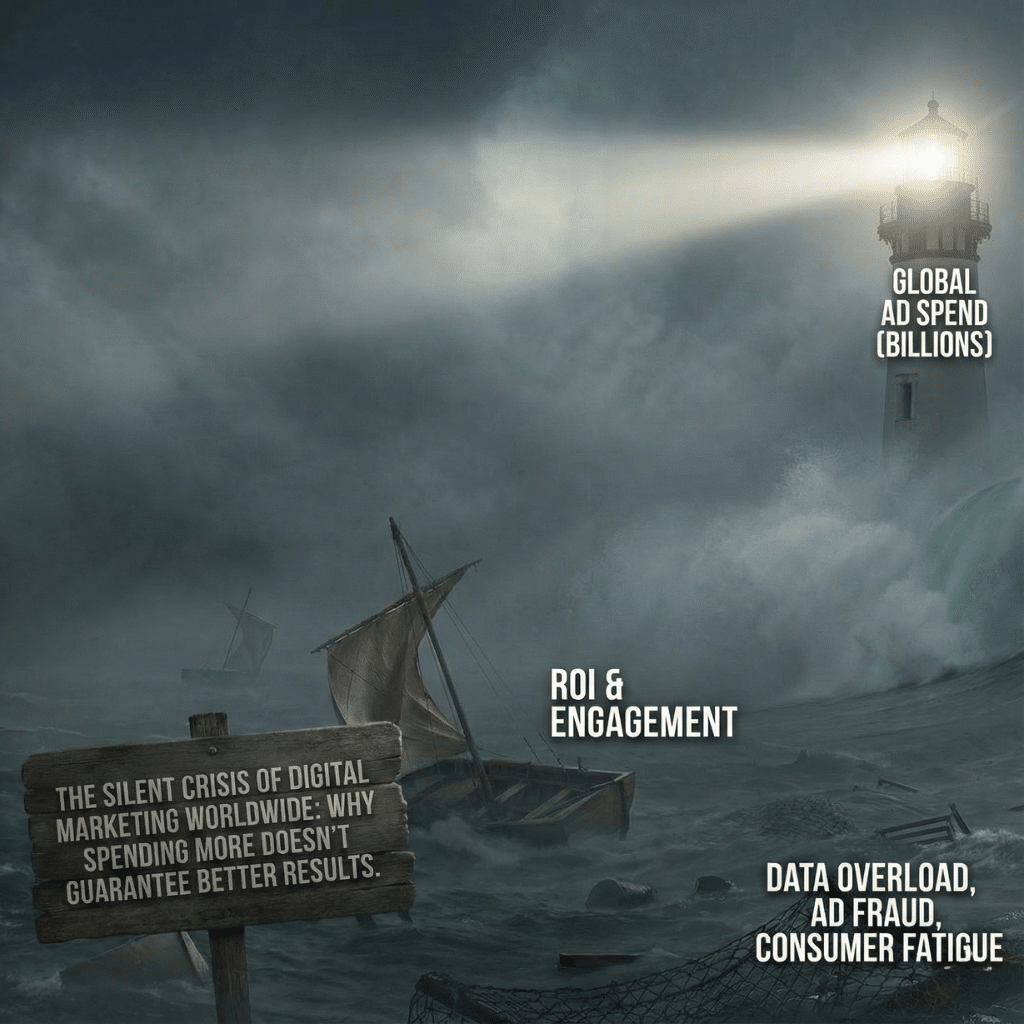
Marketing Crisis
The Silent Crisis in Latin America’s Digital Marketing: Why More Investment Doesn’t Always Mean Better Results
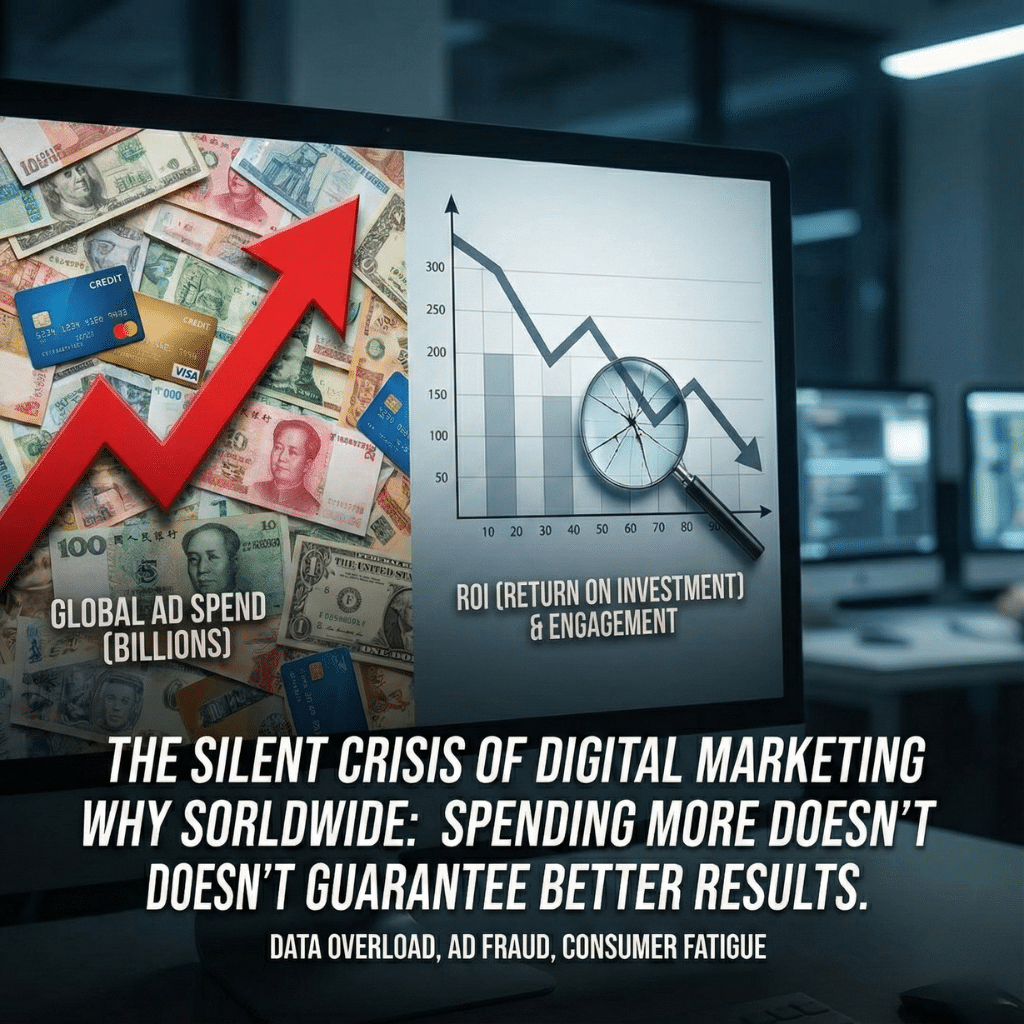
If you’re a business owner in Latin America and have increased your digital marketing budget in recent years, you’re not alone. In fact, 67% of companies in the region did the same in 2024. By 2025, digital ad spending is projected to reach $25.14 billion, accounting for over 55% of total ad expenditure.
But here’s the paradox: while investment rises, results are not scaling proportionally.
Let’s explore why this is happening and how to avoid falling into the same trap.
The Symptom: Everyone’s Going Digital, Few Are Winning
Digital presence has become nearly universal:
93% of businesses use social media
72% do email marketing
67% invest in SEO
64% run paid ads
Even small businesses are showing up online: 43% use WhatsApp Business regularly, and 35% maintain active Facebook pages.
So, what’s the problem? The issue isn’t presence—it’s performance. Most of that presence doesn’t generate real business results.
The Diagnosis: Strategic Fragmentation Is Undermining Results
Only 28% of Latin American companies have an advanced, structured digital strategy. The rest operate reactively, using disconnected tools without aligning them to business goals.
Even worse, just 1 in 3 digital transformation projects reach their objectives. The main reason isn’t a lack of budget or tools—it’s the absence of a plan. Around 64% of projects start without any strategic roadmap.
Businesses are buying isolated tactics (a website here, a Facebook campaign there), without connecting them into a cohesive strategy.
Common Symptoms You Might Recognize
Symptom 1: Visibility Without Conversion You’re getting likes, website visits, maybe even engagement—but not more customers or sales. You’re seeing brand awareness, but not business growth.
Symptom 2: The “Scattered Efforts” Syndrome You’re using WhatsApp, running a bit of Meta Ads, posting occasionally. But there’s no consistency or central narrative. This fragmentation kills your return on investment.
Symptom 3: Ignored Analytics You have access to data (Instagram Insights, Google Analytics), but no one knows how to interpret or use it. Only 4% of SMEs in LATAM use analytics consistently to guide decisions.
Symptom 4: Unprepared Teams 70% of SMEs admit their teams have only “intermediate” digital knowledge. Just 10% feel fully equipped. The result? Complex strategies are being executed by underprepared teams.
The Root Problem: Confusing Tactics with Strategy
Too many businesses are buying aesthetics (a logo, a website, a social media grid) when what they really need is strategy.
Design alone doesn’t generate ROI. A plan does. Without clear goals, defined audiences, actionable steps, and measurement systems, even the best-looking campaigns fail.
What Not Having a Strategy Is Costing You
Scenario A: No Integrated Strategy
$2,000/month spent on various tactics
Freelance designer for socials: $500
Facebook ads without a goal: $800
Outdated website: $200
Occasional emails: $500 Result: Some visibility, no ROI.
Scenario B: Strategy-Aligned Investment
Same $2,000/month
Each dollar tied to a specific business goal
Data is reviewed weekly
Teams understand what they’re building and why Result: Leads, conversions, growth, clear ROI.
Three Root Causes of Failure (And How to Fix Them)
Cause 1: Lack of Planning (64%) Solution: Start with clear business goals (12–36 months), define how digital supports them, and decide what to measure.
Cause 2: Poor Organizational Change Management (74%) Solution: Digital is cultural. Train your team, explain the why—not just the how—and lead by example.
Cause 3: Immature Data Use (59%) Solution: Don’t jump into AI and automation without first building strong habits around data capture and decision-making.
The Real Solution: Tie Digital Strategy to Business Strategy
Your digital marketing should be a direct extension of your business strategy—not a disconnected task assigned to “the marketing guy.”
This means:
Starting with business goals, not tools
Linking each digital tactic to a measurable business outcome
Prioritizing capability building before adding tools
Measuring what matters (not just vanity metrics)
Iterating and optimizing based on real data
5 Questions Every Business Owner Should Ask
Can you link every marketing action to a specific business goal?
Is your team reviewing analytics weekly and making decisions from them?
Do you have a document that outlines your digital strategy?
Are you seeing a measurable ROI from digital or just online visibility?
Could you explain to an investor how each dollar in marketing drives business growth?
If you answered “no” to 3 or more, you’re likely operating without a true digital strategy.
Change Starts with a Decision
You don’t need a bigger budget—you need smarter execution.
The gap between companies wasting money and those growing online isn’t size or industry—it’s the decision to align digital with strategic business growth.
Trendy design fades. Viral campaigns disappear. But a strong, integrated digital strategy creates value every month, year after year.